Damsel Fish

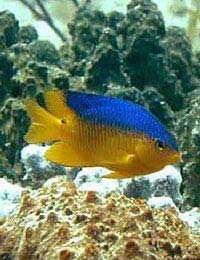
Exotically coloured and known for their toughness damsel fish are a popular aquarium choice. However, their natural aggressiveness and need for space can make them difficult to keep successfully.
One of the reasons why damsel fish are popular in reef aquariums is that their grazing habits keep coral free of algae without harming the polyps. They also eat the zooplankton found in the natural ecosystem, so they should not be kept in an aquarium with aggressive mechanical filtration which may kill these plankton. They will usually accept flakes but, for best results, should be supplied with a variety of foods including freeze dried and live food.
Sometimes damsel fish develop a symbiotic relationship with an anemone or other cnidarian like that for which clown fish are famous. Due to their general fondness for similar hiding places in niches on the reef, and their tendency to be fiercely territorial about them, they should not be kept with clown fish or butterfly fish. They are less aggressive in general if they have plenty of space and plenty of cover to make them feel secure. Though they may bully smaller fish, they're often okay with dissimilar-looking species of their own size, but they seem to be particularly tasty so should not be kept with any fish large enough to eat them.
Types of Damsel Fish
There are numerous species of damsel fish in the wild, but only a limited number have proven capable of adapting to aquarium conditions.- Yellowtail Damsel Fish -The most popular damsel fish available, these naturally resilient fish are comparatively peaceful if kept in a shoal in a tank where they feel secure.
- Three Stripe Damsel Fish -These striking black and white fish are fairly aggressive and need a large aquarium with plenty of hiding places.
- Cerulean Damsel Fish -These vividly coloured fish are very territorial and should be added to the aquarium only after more peaceful fish have had time to establish themselves.
- Sulphur Damsel Fish - With exotic yellow colouration, these hardy and adaptable fish are aquarium favourites.
- Blue Green Chromis -These stunningly beautiful iridescent fish are naturally hardy and peaceful by nature. Despite being small they need a lot of swimming space.
- Garibaldi Damsel Fish -These handsome orange fish are very aggressive towards their own kind but can live fairly peacefully with other species. They are comparatively large and long-lived.
Breeding Damsel Fish
Getting a pair of damsel fish is easy, as they will change sex so that one is male and one is female. The male will seek out a flat horizontal surface and clean it for use as a nesting site, before engaging in a complex courtship dance involving colour changes and sometimes the production of loud clicking sounds. Sometimes a male will court several females at once and collect all their eggs in his nest, which he will then defend vigorously. He will also fan them with his fins to keep them cool, often neglecting to eat in the process. However, after the fry hatch he may pay them little attention, so it's a good idea to remove them if you have a busy tank and want them to survive. They are very small to begin with, but can usually be fed successfully on plankton.Damsel fish can live for well over a decade, so you'll have to be ready to make a serious commitment to them. However, bright and interesting as they are, they're always fascinating to watch, and they can make a superb addition to your reef aquarium. Provided you can fit them into your community tank successfully, they're comparatively easy to look after, and are one of the best choices for those new to keeping marine aquariums.

Re: Providing Toys for Your Fish
Toys for my baby Flowerhorn fish??? And where to buy them ?
Re: Snail Infestations in Your Fish Tank
My coy fish just started darting and running into the glass. I've checked them over and see nothing on the outside of…
Re: My Pet Fish is 20 Years Old is this a Record?
I purchased a gold fish on April 1997 for my daughters and the same fish is alive and well. The reason I'm…
Re: Dealing with Bullying Between Fish
I have 3 Bolivian butterfly rams not sure the genders,but at the start all 3 were fine but just recently we’ve notice 2…
Re: Using Electrical Devices Safely In Your Aquarium
Monthly water changes isn’t enough I would be changing at least a 1/3 weekly. I do it more often than…
Re: Dealing with Bullying Between Fish
I have a blue gourami that has been living with 4 platty’s and a yoyo loach. I noticed a couple of my fish missing. I…
Re: Lighting for Aquatic Animals
Will a UV submersible light harm my tropical tank and fish. Thanks for any help
Re: Dealing with Bullying Between Fish
Recently put 12 new Africans in my 55 gallon tank. Many rocks and hiding places. After 2,3 days one of them, obliquidens,…
Re: Food Quantities
Just noticed smallest neon tetra tail is missing and white on the edges. Another also has half of tail missing. They was OK a few days ago. I only…
Re: Providing Toys for Your Fish
I have guppies and I think the ideas for toys might be too big, I have tried training them but they aren't responding.