Piranhas

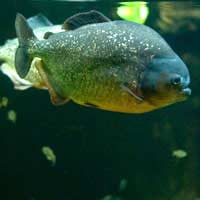
If you want to keep something really exciting in your tropical aquarium the chances are that you've thought about piranhas. With a reputation as one of the world's most fearsome fish, the piranha is actually quite shy by nature, but will become more confident if properly cared for. A naturally hardy fish, it makes a good choice for the beginner aquarist - provided, of course, that basic safety precautions are taken.
Piranhas are relatively big fish, growing to as much as twelve inches in length, and they need a fair amount of space to swim around, so make sure your aquarium is large enough for them. When young they prefer to live in shoals, but as they get older they become more solitary and territorial. Older piranhas who have not been raised together should not be kept together. They can be kept with larger fish of other species, but may occasionally bite them. Once they are fully grown they will generally leave much smaller fish alone, especially if they have been trained to accept non-live food.
Many aquarists feed their piranhas on smaller fish, but this is not recommended, as it results in a high fat intake which can lead to obesity. Young piranhas will happily accept flakes and freeze dried foods like tubifex and bloodworm, but older ones prefer a meatier diet. Pieces of lean beef, chicken and fish are popular choices. However, to remain in good health, your piranhas will also need vegetable matter in their diets. Pieces of raw potato, banana and courgette are usually well received.
Piranhas can live for a long time - in some cases up to twenty five years - so taking them on is a long term commitment. Over time they can become quite tame and friendly towards their owners, but you should always be cautious around them. Although it's rare for well fed piranhas to attack people, they may sometimes bite if they feel nervous or threatened, and they can do serious damage.
Types of Piranhas
Most species of piranhas look roughly similar, though with flashes of different colours. However, they vary quite a bit in temperament and needs.- Red Belly Piranhas -The most popular choice for aquariums, these colourful fish are highly active when hunting but otherwise shy and quiet.
- Black Piranhas -These highly aggressive fish should be kept alone in an aquarium with a secure hood to prevent them from escaping when jumping. They have been known to bite through plastic aquarium equipment.
- White Piranhas -These large fish prefer an entirely fish based diet and need an aquarium with subdued lighting and lots of hiding places.
- Gold Piranhas -Also known as black diamond piranhas, these exotic looking fish are among the small piranha species but are highly aggressive and should be kept alone.
- Wimple Piranhas -These small, distinctively shaped fish can usually be kept in shoals. They may appear placid but they can strike extremely fast.
Breeding Piranhas
Breeding piranhas in captivity is notoriously difficult, since many will tear each other apart on sight, but if you do manage to find a compatible pair you'll discover that they need very little help. Supply them with loose stones, plants and bits of driftwood and they'll build a nest in which to lay their eggs, which take two to three days to hatch. The male will be primarily responsible for guarding the fry, and he'll be even more aggressive than usual when doing so, so be careful around him. The fry can be fed on small live brine shrimp.Piranhas are alert, curious fish who make take a few months to adjust to a new home but who always pay attention to the wider environment, getting to know their owners. Take the time to get to know your piranhas and you could be in for a fascinating fishkeeping experience.

Re: Providing Toys for Your Fish
Toys for my baby Flowerhorn fish??? And where to buy them ?
Re: Snail Infestations in Your Fish Tank
My coy fish just started darting and running into the glass. I've checked them over and see nothing on the outside of…
Re: My Pet Fish is 20 Years Old is this a Record?
I purchased a gold fish on April 1997 for my daughters and the same fish is alive and well. The reason I'm…
Re: Dealing with Bullying Between Fish
I have 3 Bolivian butterfly rams not sure the genders,but at the start all 3 were fine but just recently we’ve notice 2…
Re: Using Electrical Devices Safely In Your Aquarium
Monthly water changes isn’t enough I would be changing at least a 1/3 weekly. I do it more often than…
Re: Dealing with Bullying Between Fish
I have a blue gourami that has been living with 4 platty’s and a yoyo loach. I noticed a couple of my fish missing. I…
Re: Lighting for Aquatic Animals
Will a UV submersible light harm my tropical tank and fish. Thanks for any help
Re: Dealing with Bullying Between Fish
Recently put 12 new Africans in my 55 gallon tank. Many rocks and hiding places. After 2,3 days one of them, obliquidens,…
Re: Food Quantities
Just noticed smallest neon tetra tail is missing and white on the edges. Another also has half of tail missing. They was OK a few days ago. I only…
Re: Providing Toys for Your Fish
I have guppies and I think the ideas for toys might be too big, I have tried training them but they aren't responding.