Tropical Fish Anatomy

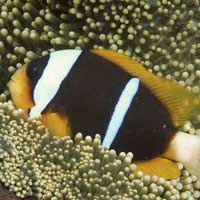
Although tropical fish vary a great deal in size and body shape their basic anatomy is essentially the same. Understanding how your fish are built can help you to understand their needs and to detect disease.
Basic Anatomy
The most obvious difference between fish and mammals is the way they breathe. Most species of fish have no lungs and instead use gills to extract oxygen from water. Water enters through the mouth of the fish and is then passed over the delicate folds of gill tissue, where oxygen is absorbed. The gills are protected by a hinged bony cover called the operculum.Most of the rest of the inside of a fish is essentially similar to the inside of a human. You'll find a heart, liver, stomach, intestines and kidneys, protected (in bony species) by a ribcage, with a brain and spinal cord to send signals to them. There is also a special organ called the pyloric caeca, which produces enzymes to help with the digestive process.
The Lateral Line
The lateral line is a sensory organ which runs the length of the fish's body, usually visible on either side as a slight indentation in the scales. It is extremely sensitive to vibration and is used to help the fish follow what's going on in the water around it, identifying things such as the location of other fish and the shape and direction of currents.The Swim Bladder
Most bony fish control their buoyancy using a special organ called the swim bladder. This is essentially a bag of gas which can be inflated or deflated. Think of it like a hot air balloon. When the balloon is full, it rises; when deflated, it sinks to the ground. The swim bladder enables fish to relax high up in the water without having to swim constantly to keep themselves from sinking. It is positioned above the stomach and gonads, so fish who have eaten too much or who are gravid with eggs sometimes have difficulty using it properly.Reproductive Organs
Fish sex is not always fixed the way it is in humans. Several species have the capacity to change sex spontaneously, increasing breeding opportunities. However, male and female reproductive organs are quite distinct. Females have a larger body cavity to contain eggs (and, in some species, fry), swelling noticeably when they are about to spawn. Males have a smaller organ which produces milt. In most species this is expelled from the body to fertilise eggs which have been laid externally, but in some cases it is inserted into the body of a female using specialised claspers (as in sharks and rays) or fused anal fins (as in many species of livebearer).In most species of fish, milt and eggs are both expelled from the body through a small opening beside the waste vent, but in some species the female has an ovipositor, a long tube which gives her more control over where her eggs are deposited. This can enable her to place them in small spaces less easily accessed by predators.
Specialised Organs
Besides the organs described above, some species of fish have specialised organs which enable them to fill specialised environmental niches. These include the following:- Barbels -Found on koi carp, loaches, catfish etc., these sensitive organs look rather like whiskers, extending from the sides of the mouth. They are extremely good at feeling and smelling and are used primarily for finding food in murky water.
- Gill Rakers -These bony extensions of the gill covers act as a sort of net to stop small food animals escaping from filter feeding fish.
- Electromagnetic Sensors -Possessed by sharks and rays, these assist with navigation and may play a role in communication.
- Stings -Usually used only for defence, these are barbed organs designed to force venom through the skin of an enemy.
- Electric Organs -These modified muscles enable some eels, rays and other fish to produce an electric shock to stun prey or deter enemies.
- Create an Ethical Aquarium
- Starting an Aquarium from Scratch
- Euthanasia for Fish
- Caring for Baby Fish
- Introducing New Fish Into Your Tropical Fish Tank
- Snail Infestations in Your Fish Tank
- Adding Accesories To Your Tropical Fish Tank
- Tropical Fish Tank Security
- Dealing with Bullying Between Fish
- Transporting Fish
- Rescue Solutions
- Saltwater Fish Disease
- Choosing The Right Fish For Your Aquarium
- Water Quality
- How To Detect Fish Diseases And Injuries
- Livebearers
- Breeding Fish
- Freshwater Fish Disease

Re: Providing Toys for Your Fish
Toys for my baby Flowerhorn fish??? And where to buy them ?
Re: Snail Infestations in Your Fish Tank
My coy fish just started darting and running into the glass. I've checked them over and see nothing on the outside of…
Re: My Pet Fish is 20 Years Old is this a Record?
I purchased a gold fish on April 1997 for my daughters and the same fish is alive and well. The reason I'm…
Re: Dealing with Bullying Between Fish
I have 3 Bolivian butterfly rams not sure the genders,but at the start all 3 were fine but just recently we’ve notice 2…
Re: Using Electrical Devices Safely In Your Aquarium
Monthly water changes isn’t enough I would be changing at least a 1/3 weekly. I do it more often than…
Re: Dealing with Bullying Between Fish
I have a blue gourami that has been living with 4 platty’s and a yoyo loach. I noticed a couple of my fish missing. I…
Re: Lighting for Aquatic Animals
Will a UV submersible light harm my tropical tank and fish. Thanks for any help
Re: Dealing with Bullying Between Fish
Recently put 12 new Africans in my 55 gallon tank. Many rocks and hiding places. After 2,3 days one of them, obliquidens,…
Re: Food Quantities
Just noticed smallest neon tetra tail is missing and white on the edges. Another also has half of tail missing. They was OK a few days ago. I only…
Re: Providing Toys for Your Fish
I have guppies and I think the ideas for toys might be too big, I have tried training them but they aren't responding.