Danios

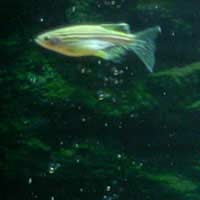
If you're new to the aquarium hobby it's hard to think of any fish which could make a better choice for you than danios. Small, hardy, easy to care for, attractive to look at and always active, they're great pets, and they're not even very expensive. Fond of the upper levels of the aquarium which most other fish avoid, they fit in easily in community tanks and can make a superb addition to your aquarium.
Playful and highly sociable, danios are naturally happy in the aquarium environment, but they'll be at their happiest if you can supply them with strong currents, plants, and other items which give them things to do. Make sure they have plenty of space to move around. They enjoy darting about and chasing each other, though never aggressively. Omnivorous by nature, they will eat almost any food, but you should make sure they get plenty of vegetable matter (in the form of flakes or algae discs) in order to be healthy, and they enjoy live food for treats.
Types of Danios
There are six types of danio commonly available:- Zebra -With striking horizontal stripes, these active little fish make a handsome addition to any aquarium. They prefer relatively cool water and plenty of light.
- Pearl - These beautiful iridescent fish are highly adaptable but do need plenty of oxygen, so make sure your aquarium has good filtration.
- Leopard -These hardly little fish have a black spotted pattern all over their bodies. They sometimes interbreed with zebra danios.
- Gold - Highly active and fond of playing near the surface, these fish have golden-orange stripes running the length of their bodies. They are sometimes (incorrectly) called albinos.
- Blue -These fish have a mottled blue and white appearance and are believed to be descended from leopard danios.
- Giant -Twice the size of other danios, these fish are happiest in large shoals, so they need a lot of space. They are also quite shy, so they won't give you as much to watch.
Danios enjoy living in large groups but you should always keep them in odd numbers in order to avoid antagonism over pair dynamics. If you keep more than one species of danio together, make sure you have at least three of each kind.
Breeding Danios
One of the reasons why danios are so popular is that they're easy to breed - in fact, it can be hard to stop them breeding! If they are happy with their surroundings, the average pair will spawn about once a week, starting as soon as there's light in the morning. However, they have no parenting instincts and will happily eat their own eggs and fry, so if you want to preserve the young you'll have to use a spawning tank or quickly remove eggs from the main tank. You can do this gently using a pipette or a straw. Approximately two hundred eggs will be laid at each spawning.Males and females are fairly easy to distinguish, with the females being larger and rounder.
Danios are great fun and many aquarists who get a few as an experiment end up falling in love with them. Lively, resilient and charming as they are, they come very close to being the perfect aquarium fish.

Re: Providing Toys for Your Fish
Toys for my baby Flowerhorn fish??? And where to buy them ?
Re: Snail Infestations in Your Fish Tank
My coy fish just started darting and running into the glass. I've checked them over and see nothing on the outside of…
Re: My Pet Fish is 20 Years Old is this a Record?
I purchased a gold fish on April 1997 for my daughters and the same fish is alive and well. The reason I'm…
Re: Dealing with Bullying Between Fish
I have 3 Bolivian butterfly rams not sure the genders,but at the start all 3 were fine but just recently we’ve notice 2…
Re: Using Electrical Devices Safely In Your Aquarium
Monthly water changes isn’t enough I would be changing at least a 1/3 weekly. I do it more often than…
Re: Dealing with Bullying Between Fish
I have a blue gourami that has been living with 4 platty’s and a yoyo loach. I noticed a couple of my fish missing. I…
Re: Lighting for Aquatic Animals
Will a UV submersible light harm my tropical tank and fish. Thanks for any help
Re: Dealing with Bullying Between Fish
Recently put 12 new Africans in my 55 gallon tank. Many rocks and hiding places. After 2,3 days one of them, obliquidens,…
Re: Food Quantities
Just noticed smallest neon tetra tail is missing and white on the edges. Another also has half of tail missing. They was OK a few days ago. I only…
Re: Providing Toys for Your Fish
I have guppies and I think the ideas for toys might be too big, I have tried training them but they aren't responding.